
408-A Near Jain Bhawan,
Kapurthala Road, Jalandhar

A fistula-in-ano is an abnormal tunnel between the anal canal and the skin near the anus. Treatment goals are to heal the fistula while preserving continence (control of bowel movements). Recently, laser-based techniques have gained attention because they can be less invasive and cause less pain and scarring than traditional surgery. Nevertheless, there are important facts every patient should know.
“Laser” for fistula usually refers to energy delivered inside the fistula tract to close it from the inside (examples: FiLaC, laser ablation).
Laser energy destroys the tunnel’s lining and stimulates healing, ideally without cutting the sphincter muscle.
We’re here to help you. Reach out to us for consultations or queries.
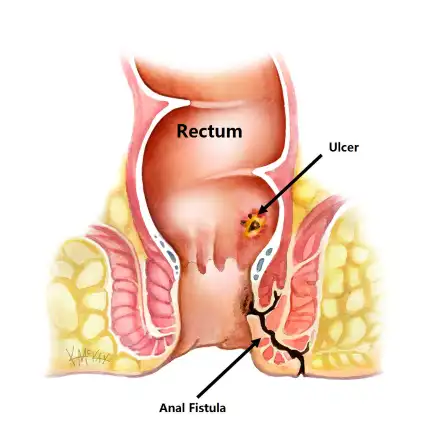
A laser by itself does not address all components of a fistula. Many fistulas have branches, collections (abscesses), or internal openings that also require attention.
For complex fistulas (high fistulas, multiple branches, horseshoe fistulas, or those that cross significant sphincter muscles), laser alone often fails to eradicate the disease or fully reduce the risk of recurrence.
Most successful outcomes come from a hybrid approach: combining laser ablation with other steps such as drainage of abscess, excision of secondary tracts, seton placement, or repair of the internal opening. The exact combination depends on the fistula type.
Presence of an abscess or infected branches, which need drainage.
High trans-sphincteric or supra-sphincteric fistulas where preserving continence matters.
Recurrent fistula after earlier surgery.
Complex branching or long tracts where a simple single-step laser will not reach the entire disease.
Laser techniques can be part of safe, effective fistula treatment, but laser alone is rarely a universal cure. The best results come from careful patient selection and hybrid procedures tailored by an experienced surgeon. If you have a fistula, consult a proctologist, review their experience with lasers and complex cases, and discuss imaging and treatment options.
Dr. Kamal Gupta, Karan Hospital, Jalandhar.
For more information or appointments: 87250 48415